

Matching the sensor to the room
Rental and hospitality stock is not one environment. A serviced flat with a gas hob, a caravan let, a boat cabin and a hotel room with an attached garage all present different risks, and the monitor you specify should follow the risk rather than the room count.
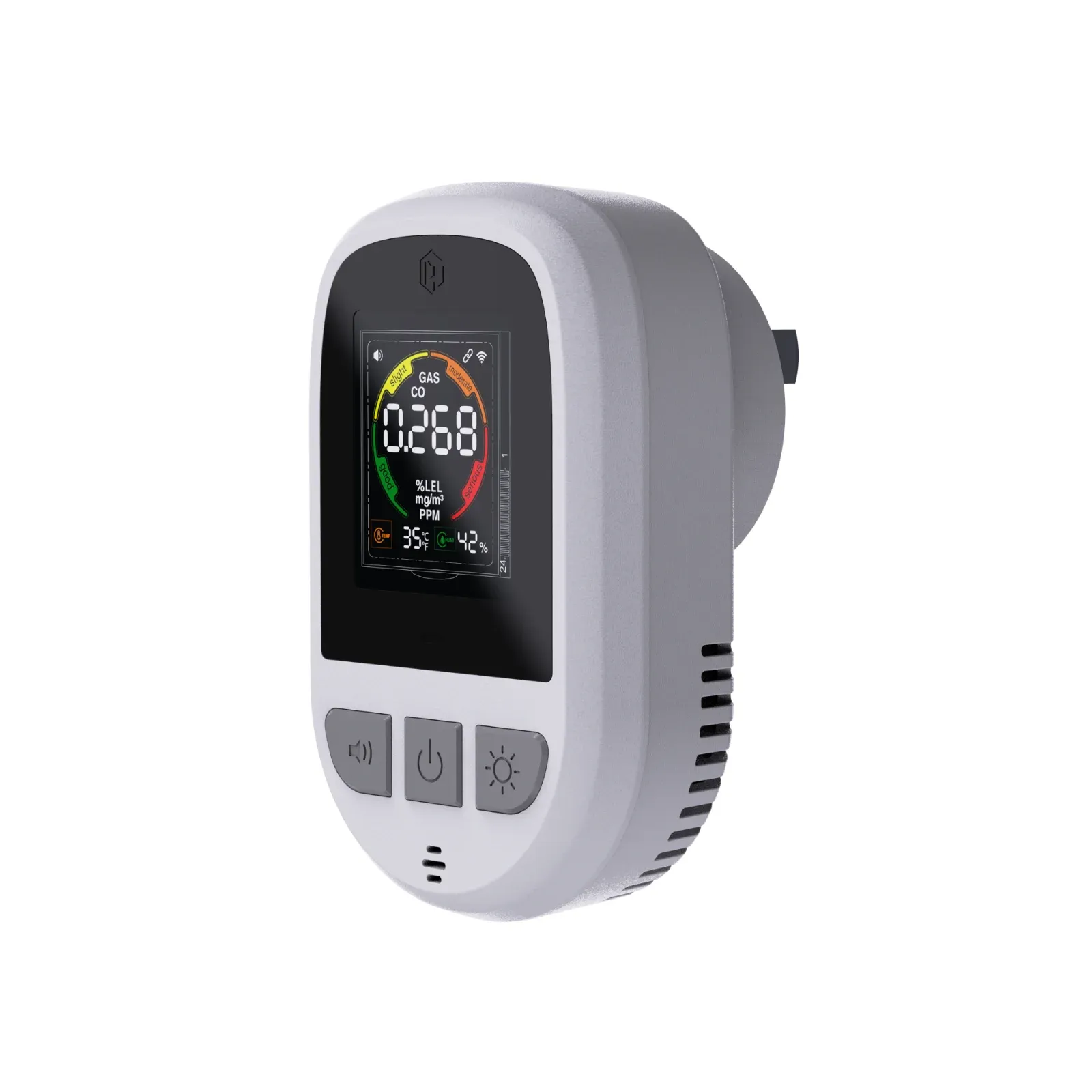
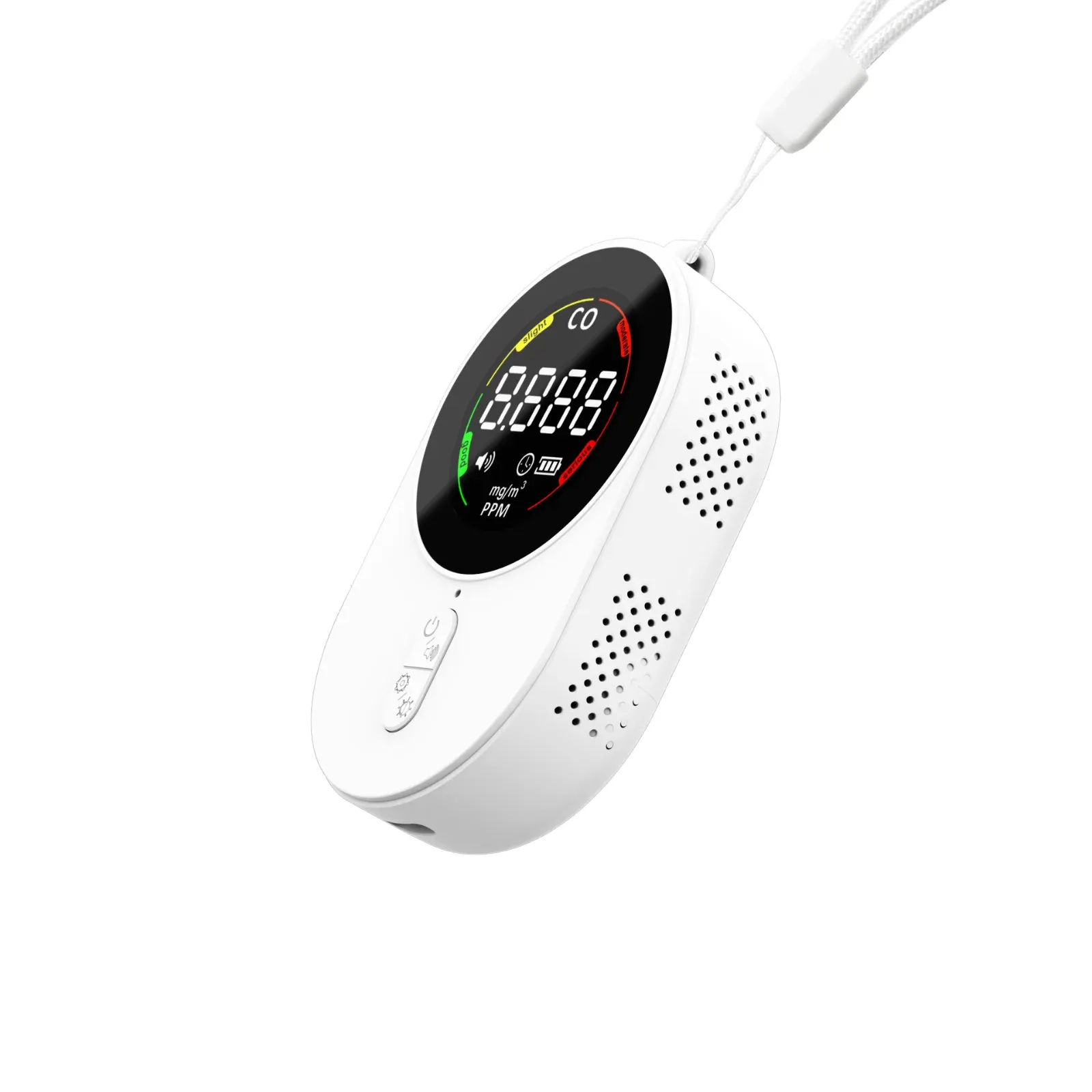
For carbon monoxide specifically, an electrochemical cell is the sensor class to ask for. The AK32A uses a dedicated electrochemical CO cell, described as selective and stable over years rather than months, and runs on mains power so it never depends on someone remembering to charge it. The AK18A puts an electrochemical CO cell in a 39 g body that travels with the guest or the inspector, with the reading on screen continuously and an alarm that sounds when it crosses the threshold.
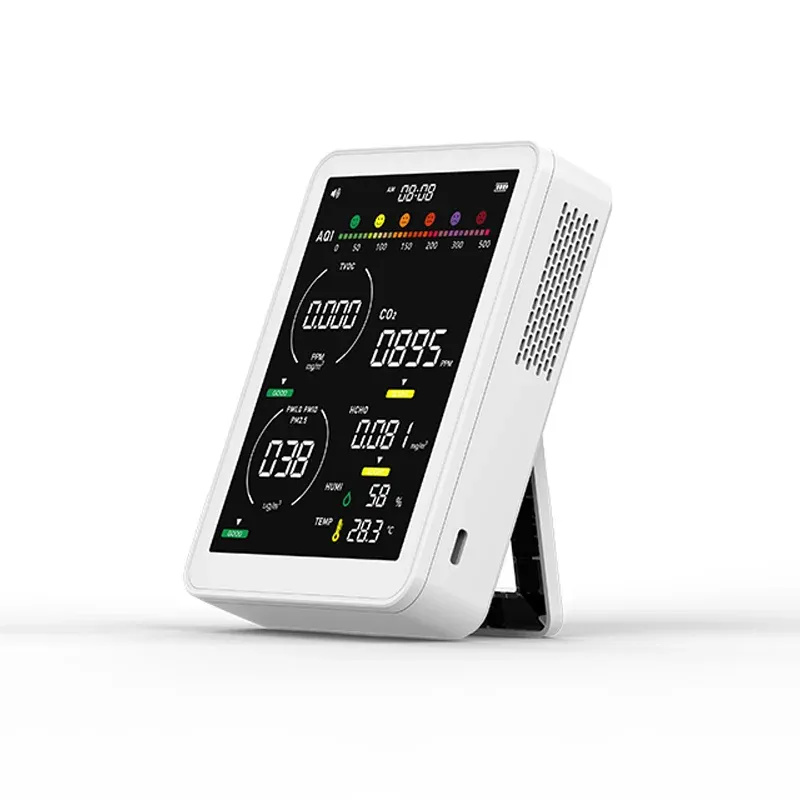
Where you want CO measured alongside the rest of the indoor picture, the AK16D-CO adds an electrochemical CO cell to a nine-parameter desktop monitor, bringing the count to nine measured parameters. That model is positioned as a monitor for continuous sited use with an on-screen alert; where local regulations require a listed CO alarm, it sits alongside one rather than replacing it.
- Mains-powered fixed position: AK32A
- Portable, carried between rooms: AK18A
- CO plus full air quality picture: AK16D-CO
Planning for the rooms guests actually use
Hospitality sites fail on the rooms nobody watches: the boiler cupboard, the kitchen with the gas hob, the attached garage, the unvented heater in a converted outbuilding. The AK16D-CO configuration is aimed at exactly those places, and at any rented property where the landlord carries a duty of care.
Installation effort is usually the larger cost at scale, not the hardware. The AK32A goes into a socket with no wiring, no bracket and no installer, and is supplied in US and EU pin variants from one product, running on 110–240 V. That matters when a landlord is fitting out twenty units, because installation cost is often larger than the hardware cost.
Carton density affects how a rollout is staged. The AK32A ships 120 per carton, the highest unit density in the catalogue, at 520 × 505 × 355 mm outer and 13.9 kg (US) or 15.1 kg (EU) gross. The AK18A ships 100 per carton in a 433 × 348 × 222 mm outer at 11 kg gross.
What guests and staff will read on the screen
A monitor in a guest-facing room has to be legible to someone who has never seen the device before. The AK16C collapses eight readings into a single 0–500 AQI figure with a colour scale, while all eight underlying values stay on screen, so a guest and a facilities manager can read the same unit.
Presentation choices matter more than sensing differences in some rooms. The AK23A separates particulates on the left dial from gases on the right, with a six-step colour and expression scale across the bottom so a guest interprets the air without interpreting the numbers. Its controls sit out of sight, leaving a clean front panel, which suits a hotel room, showroom or reception area.
Where the device is likely to be knocked, specify the fixed-angle version. The AK28A uses a moulded rear wedge instead of a fold-out leg, and gives clock, alert, brightness and power their own front keys rather than a menu.
CO2 and ventilation evidence across a portfolio
Ventilation complaints in rented and hospitality stock are usually about stuffiness rather than a named contaminant. CO2 is the parameter that shows how many people the ventilation is failing to keep up with, and the AK18B pairs it with TVOC in a 39 g body that can be carried from room to room rather than sited in one.
For a figure you can put in a report and compare month to month, specify the infrared NDIR CO2 channel. The AK4 changes only the CO2 channel from a semiconductor element to infrared NDIR, which does not drift with humidity and is not thrown by alcohol gel, perfume or cleaning spray. The AK25AH carries infrared NDIR CO2 in the smallest body in the range, at 98 g, so humidity swings and cleaning products leave the reading where it is.
Where a single-parameter device is enough, the AK8 shows one CO2 value inside a green-to-amber-to-red arc, with NDIR responding to CO2 and nothing else, so cooking vapour, hand sanitiser and air freshener leave the reading untouched.
- Carried between rooms: AK18B
- Report-grade CO2 figure: AK4
- Smallest NDIR body: AK25AH
- CO2 only, read from the doorway: AK8
Records, logging and shared-site checks
Rental portfolios and multi-room hospitality sites generate disputes about conditions on a given date. The AK33 stores its own record on board, so it logs whether anyone is in the room or not and hands the record over later, and at 173 g and 25 mm thick it is built for walking a building and reading back where levels changed.
Longer trend work needs a longer window. The AK34 records both 24-hour and 15-day trend history, which makes pollution patterns and daily changes comparable, and it uses a True NDIR CO2 sensor with external sensors. Its 7-inch colour display carries three-colour AQI indicators and audible alarms, and it runs on a 5000 mAh battery for up to 8 hours of portable operation.
Where a device must stay plugged in overnight in a room someone sleeps in, the AK30 dims its own backlight as the room darkens, using a 5000 mAh battery and eight hours of standby.
Before you place the order
Two housekeeping points decide whether a rollout runs smoothly. First, confirm the sensor class per model rather than per range: the AK11 family alone spans semiconductor CO2 in the AK11T and infrared NDIR in the AK11H, in the same 98 × 32 × 67 mm shell.
Second, check the spec sheet of each model you shortlist for its own certifications and compliance documentation, and confirm the packing and plug variant against your destination market before committing.